Categories
Uncategorized

Nervous interviewer? 3 confidence-building tips for interviews

Intense sweating?

Blanking out?

Clicking your pen?

Rambling?

You might be a nervous interviewer. I see lots of people who are anxious before their interviews. It’s natural. It’s a sign you care a lot. It also sucks because it gets in your way of performing well and landing that dang job. 

BUT, with the right mindset and preparation, you can approach your next job interview with confidence and boost those chances of success. Let’s explore some tips and insights I share with my clients that can help you navigate the interview process with more ease.

Most people who struggle with interviews often experience anxiety because they anticipate being asked questions they either won’t be able to answer at all, or won’t have a good answer to. 

However, if you’re applying for jobs you know you’re qualified for, the chances of running into a question you can’t handle are pretty close to zero. 

Remember, the only reason you’re even in the interview is because you have the skills and experience the employer is seeking. Rather than letting anxiety take over, allow yourself to relax and trust in your abilities. When you’re relaxed, you’re more likely to feel confident and provide thoughtful responses.

They are not going to stump you!

It’s easy to slip out of your natural personality in an interview because the power dynamic can make you nervous. To combat this, consciously remind yourself to stay grounded in your personality in the interview. 

One thing that can help you stay in your personality is breaking the ice early. Try making a casual observation about the interviewer’s room or background during the initial introductions. 

For example, you could say something like, “Wow, I just gotta say, your cork board is huge! I need me something like THAT!” or “Before we start, I just wanna say your background kinda reminds me of that one scene in Finding Nemo!” or “I see the sun is shining where you are, and it’s reminding me I need to go get some sun today!” 

These small personal touches can help you relax and allow your true personality to shine through.

Even when you know you have a solid answer to a question, resist the urge to respond immediately. 

Instead, take a brief pause – a second or two – before answering. Look up, thoughtful as always, and then provide your response. This small pause can help you gather and organize your thoughts, preventing rambling or incoherent answers. 

Additionally, it conveys valuable intangibles to your interviewers, such as confidence, an ability to think carefully on your feet, and comfort handling pressure (even if you don’t actually feel that way in the moment).

And there ya go! Start with these tips, and go from there.

Remember, if you’re applying for jobs that align with your qualifications, you’re likely to have good answers to the interview questions.

By embracing your qualifications, bringing your personality to the interview, and pausing before responding, you’ll help yourself take the edge off your anxiety in your next job interview.

Good luck out there interviewers!

You’re job searching–or thinking about job searching–and not having a good time?

You’re putting off job searching because you’re worried about the stress?

Yeah it’s hard out there.

Coaching might be a good resource for you, but if you’re like most people, you’re probably not sure.

If you’d like to know more about coaching, how it has helped others in your situation, and how it can help you, fill out your info below or email me at brandon@begallantcoaching.com.

I’ll send you a quick email with some brief information you can read and digest on your own time.

Go back

Your message has been sent

Warning
Warning
Warning.

Or you can just sign up for a free consultation with me here.

Either way, let’s stay connected!

~B

Categories
Uncategorized

3 Tips For Interview Preparation

Want more interviews? You need a better resume. Get your FREE Resume Bullet Point Guide today!

Go back

Your message has been sent

Warning
Warning
Warning.

Job interviews.

……

Did you just get a sinking feeling in your stomach when you read and thought about that? Because you’re probably not alone if you did.

Most of the people I coach are stressed out by interviews. And with good reason. Interviews are stressful by nature. You’re there because you want a job, and you getting that job kinda depends on what happens in that interview (of course, there are other factors as well).

Add that to the fact that they can be kinda awkward, your interviewers might be bad at their role, the questions might suck, you might be sweating straight through your outfit, etc. and you have what I would call a stressful situation.

It’s true that sometimes you get bad interviewers and silly questions. But you have to control what you can control, and that’s your preparation and performance. So let’s explore some preparation do’s and don’ts a little bit.

I’ve heard well-meaning people advise others to prepare for their interview by practicing with a friend. Great idea right?! Well…no. Not exactly.

Who are these friends? Do they have experience as interviewers? Can they coach you on your speaking skills? Have they been on hiring teams? Do they have insider knowledge on the role or the company? Will they be honest with you and give constructive criticism when necessary and appropriate?

If you’re going to practice with someone, you want it to be someone who at least checks some of these boxes. Otherwise, you might just be wasting your time. And theirs. Better to find someone who has the experience and skills necessary to give you feedback that is actually accurate and useful so you don’t just practice bad habits. 

Do This Instead: Find someone who knows to pay attention to your body language. Someone who will be honest about your fluff-filled rambling. Someone who has the eye, experience, and skills of a hiring manager, recruiter, or search team member. Or someone who has experience in a very similar role and knows what it takes to succeed and find favor amongst managers and supervisors.

In other words, practice with someone who actually knows what they’re doing.

Yeah. Skip the mirror. The logic behind it is it will allow you to see what you look like when you talk: your face, your gestures, your body language, so on and so forth. And you do actually want to be aware of these things!

The problem is watching yourself talk WHILE you’re talking is probably going to be more distracting than anything else. It’s unnatural and odd, and you run the risk of becoming hyper-aware of what you’re looking like to the point of distracting yourself from your own answer. And that’s counterproductive.

Do This Instead: Record yourself. Use the back camera of your phone to record yourself answering interview questions. Once you’re done answering the question(s), watch the recording of yourself. Pay attention to your facial expressions, your voice and inflections, your pacing, and of course the clarity of your speech.

Take notes on what you observe. Are you talking too slow or too fast? Do you look nervous? Does your voice do this weird thing where it gets higher on the last syllable of every sentence?

After you’ve watched the recording and taken some notes, try again. Instead of fidgeting, use controlled and varied hand gestures. Instead of being overly monotone, mix in controlled excitement when talking about things you’re really interested in. And remember to look into the camera when you’re speaking!

Using this tactic gives you all the benefits of the mirror without the distractions.

Rehearsing relies heavily on rote memorization. It’s not very adaptable. It’s rigid. Robotic. If something deviates from the script–even if that something is you on accident–it’ll throw everything off.

When you practice your responses, try not to put so much emphasis on memorizing them word for word. Focus more on the story and communicating it clearly without rambling. In particular, articulate the challenge, the process, and the result of the story. Ask yourself: What positive outcomes came about as a result of MY actions in particular? Make sure you really hammer that in.

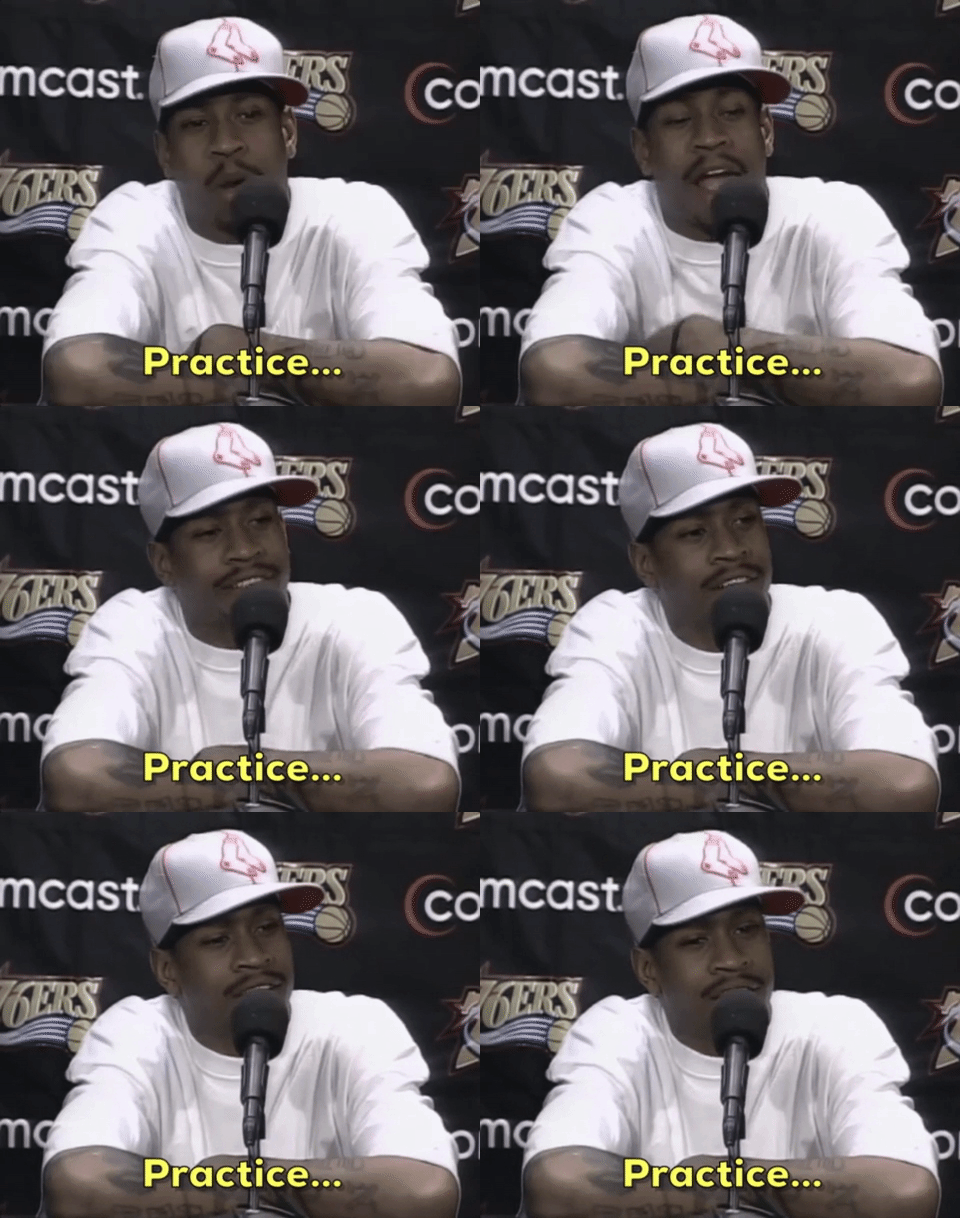
How are you practicing for your interviews? Are you being strategic and intentional? Are you being counterproductive and practicing bad habits?

The key to successful interviews is successful preparation. Practicing well.

(big Allen Iverson fan)

And it can be challenging to get comfortable with interviewing. Just like many aspects of job searching, knowing what to do and what to focus on isn’t always intuitive.

If you’re in the middle of your job search, or if you’re at the very beginning and you want to explore what support from a coach (that’s me!) could look like, now’s your chance!

Click here to sign up for a free consultation. Let’s talk about building your way to a career you’re proud of and happy with!

In the meantime, sign up to get some free resources to help you land more interviews, and find more success in them once you do.

Go back

Your message has been sent

Warning
Warning
Warning.

Read more of this content when you subscribe today.