Categories
Uncategorized

“I want more clarity”: How to clear the fog in your career journey

Get regular job search advice for free!!!

Go back

Your message has been sent

Warning
Warning
Warning.

Have you ever felt stuck in your career because you lack “clarity” or direction? 

A lot of us have been there. Matter of fact, a lot of the people I wind up coaching initially express some level of frustration over wanting more career clarity.

And it is frustrating. Because here’s what that leads to:

  • Stagnation and/or procrastination
  • Stress and anxiety
  • Boredom or boreout (yes, that’s a thing and it’s exactly what it sounds like)

But especially that first one. It’s easy to feel kinda lost in the sauce when you start thinking “Where do I go from here?” When you don’t have an answer to that, it’s somewhat natural to just say “…nowhere. Once I figure that out, I’ll get a move on.”

Let’s take a look at that for a minute, though.

Have you ever driven through heavy fog? I have because I lived in SF for a while (freakin’ Karl. Yes, its actual name is Karl the Fog. Look it up). It’s disorienting and a little bit scary. Sometimes, you can’t even see the car in front of you.

Here’s the thing you learn about driving through fog, though. As long as you stand still, you’ll never be able to see what’s around you. The only way to gain clarity about your direction and what’s coming is to move.

Standing still and thinking, reasoning, imagining, strategizing, or whatever is going to do you no good. You kinda just have to hit the gas. Lightly and responsibly, but still.

And as you start to move, the road–and environment in general–starts to reveal itself to you.

Finding clarity in your career journey is a lot like that. You don’t have to wait until the fog *hopefully* lifts. The best way to gain clarity is to start moving. You can even do it–you guessed it–lightly and responsibly.

If you’re struggling with finding clarity in your career and it’s holding you back, remind yourself that you don’t have to hit any home runs, get things perfectly right, or land your dream job. Here’s a couple tips:

One small yet intentional first step will do. Check out someone’s LinkedIn profile to get an understanding of their path (bonus if you actually reach out to them). Attend a networking event in a field you’re somewhat interested in. Follow the blog of someone who’s writing about relevant stuff. Anything to help expand your knowledge and field of view can be helpful. Engage your curiosity!

The pressure of finding and then landing your dream job is a very high bar to clear. It’s possible, but overwhelming enough to stagnate you. Instead, ask yourself: What would be good enough for now?

What’s a simple next step that would provide me with what I need and set me on a pathway towards better things? A solid stepping stone, in other words.

Good enough for now is not only productive and positive, it’s also much more attainable than identifying and landing that “perfect” job.

Moral of the story: If you want more clarity in your career, you have to DO something. It doesn’t come just by thinking about it.

Take a free course, attend a networking event, do some informational interviews, lurk around on LinkedIn.

It may seem scary, but it’s how you learn to see through the fog.

The Brave Club!

If you’re looking for a way to be more effective in your job search (in other words, get better at landing interviews and jobs), come join The Brave Club!

It’s my group coaching program designed for job seekers. If you’re an educator, leader, or career pivoter, this was built for you.

The Brave Club is a more affordable/accessible coaching option that provides you with community, strategy, accountability, and confidence you can use to more skillfully and successfully navigate the circus that is the job search.

Check out some quick details below:

  • 6 45 minute group sessions focusing on Branding, Resume Development, Job Alignment, and Negotiation
  • Access to the private Facebook group for members
  • Regular job search advice straight to your email inbox
  • Open office hours for you to get specific answers to your questions

Register as an early member by Friday, January 24th and you can get in for only $75!

Click here to learn more and get started with bolstering your job search!

Here’s what someone from the pilot group had to say about their experience in The Brave Club:

I had a great experience for someone that has a non traditional job and has not worked in a corporate environment it definitely made me start to think differently in my current role. I feel more confident having the tools to start applying I am not as scared. I highly recommend anyone to join (already have a few friends that are interested). Come in ready to share job search and interview experiences.

-Alicia S.

This is your sign! Come sign up and let’s get to it. See ya there!

Speaking of small steps, come talk to me! Getting to your next step isn’t always easy. And job searching sucks, especially nowadays.

If you’ve been thinking about exploring the world of coaching, sign up for a free consultation.

We’ll get acquainted, chat about your goals, and discuss how coaching can be the right resource for you. If you’ve been feeling a little stagnant or anxious about how you’re going to land your next job, now’s the time to get active.

Click here to sign up. What do you have to lose? It’s freeee!

Brandon creating a very comfortable environment for me to be honest about my frustration and journey. I felt validated and seen. I also appreciated that we were strategic and tactical. There wasn’t anything “lofty” about our meeting time. There were always take aways, notes, and resources shared.”

Adetola O.

Brandon is a wonderful supporter, provides a space to explore, and asks really thoughtful questions. Invest in yourself! You are worth it, and you will have a great friend to guide you along the way with no judgement.

Kristine L.

Brandon was awesome. He really listened and didn’t just try to keep us on a timeline or a schedule.

A. W.

Categories
Uncategorized

The 24 hour job application rule: Why you need to follow up fast

How’s your networking game?

More specifically, how’s your follow-up game?

Did you know that you should be following up on all of your job applications?

In fact, I tell all my coaching students they need to follow up on every single one of their applications within 24 hours or less.

Yes, that fast.

“But why? Because even when I do follow up, I almost never hear anything back.”

“What should my approach be when I do that kind of follow-up?”

“Who am I supposed to follow up with?”

These are some of the things I cover with the people in my coaching program. But keep reading for some insight.

Every hiring process moves at its own pace. Once a job is posted, you never know how fast the hiring party is going to move.

By the time you see it, you won’t necessarily know where they are in the hiring process. For example, the recruiter may have already identified the 10 candidates they want to pass on to the hiring manager for interviews. And recruiters don’t always go back to the candidate pool once this happens (unless they need to).

So if you’ve submitted your application after they’ve found 10ish applicants that meet the hiring manager’s criteria, there’s a good chance your app is not going to be seen in part because the recruiter might not know you even applied.

That is, of course, unless you tell them right away. See what I’m sayin?

Your follow-up needs to be concise and done in a way that very quickly and clearly communicates that you’re an amazing candidate for this role. You gotta convince them that they need to add another person to their small circle of really qualified candidates. In other words, you have to be incredibly well-branded. Especially if you’re pivoting from one industry to another.

Read those last few sentences again!

The people with hiring say-so should be your targets. That generally means recruiters and hiring managers. If you’ve networked well, you can get right into the interview room via the hiring manager.

You might have to do some digging to find these people, but there are ways and it’s well worth it. Keep in mind that this is a–if not THE–crucial part of your job search.

We’re getting close to the end of the summer, and that can mean we’re heading into a time of year where hiring sees an uptick for a bit.

Getting hired is hard. If you’d like help making that happen, let me know quickly! I have a few more slots open in my coaching program.

You can get into my most popular tier for $1099 if you contact me before Wednesday, September 4th. After that, it will go back to its normal price of $1295 before going up in the fall!

It’s an offer that’s only going out to those of you seeing this post, so take advantage! Message/email me if you have questions, or click here to set up your free consultation now.

See ya next time!

~B

Go back

Your message has been sent

Warning
Warning
Warning
Warning.

Categories
Uncategorized

Looking for work-life balance? Consider the case AGAINST passion

Are you looking for better work-life balance? You may want to consider removing passion from the “work” side of the equation.

Ok check this out and bear with me. Time to talk about something that–*in my personal-yet-informed opinion*–has been glorified a little too much: passion for your job.

Like me, you’ve probably heard the advice a gang of times—“Follow your passion and you’ll never work a day in your life.” Sounds dreamy, right? But what if I told you that being passionate about your job might actually do more harm than good? What if by and large, it’s just not true for most of us?

Here’s the thing: Passion is like that extra shot of espresso in our morning coffee (I don’t actually drink coffee). It feels great at first, but too much of it, and you’re jittery, overextended, and teetering on the edge of burnout. And that’s just the start.

Ever noticed how companies always say they’re looking to hire “passionate” employees? There’s a reason for that. Passionate people are often willing to go the extra mile, take on more work, and do it all for less money. Why? Because they love what they do (or at least that’s what they tell themselves), and employers know it. But here’s the trick: this can lead to you being overworked, underpaid, and ultimately burned out. Your passion can very easily pave the way for your own exploitation.

Guess what! What you’re passionate about today might not be what lights your fire tomorrow!

Uh oh!

People change, and so do their interests. When your career is tied so closely to your passion, it’s easy to then tie your identity to your career. But what happens when that passion fades? You might find yourself stuck in a job that no longer excites you, but because you’ve built your whole identity around it, leaving feels odd. Weird. Scary. Confusing. You’re about to have an identity crisis.

Listen, passion is great, but it’s not a guaranteed ticket to success. Just because you love doing something doesn’t mean you’re actually good at it—or that the market will pay you for it. The cold, hard truth is that success in your career often hinges more on skills, adaptability, and understanding the market than it does on passion. Being good at something and knowing how to navigate the job market are just as—if not more—important than being passionate about your job.

Ever feel like your job is your whole life? That’s what happens when you’re too passionate–or behaving like you’re too passionate–about what you do. Your job becomes your identity, and any setback or irritation at work hits like a ton of bricks. How ever work is going, is how your life is going.

But here’s a wild thought: you’re more than your job. When you spread your interests across different areas of your life—whether it’s hobbies, relationships, or personal growth—you build a more resilient sense of self. This way, if work isn’t going great, it’s not the end of the world.

When you’re too passionate, you might find yourself with tunnel vision. You get so wrapped up in your work that you miss out on other opportunities—opportunities that could lead to growth, new experiences, or even a better job. Plus, being too focused on one thing can make you resistant to change, even when change is exactly what you need.

Instead of obsessing over finding a job you’re passionate about, how about focusing on finding a job that you’re good at, that pays well, and that gives you the freedom to pursue your passions outside of work? You can still live a passionate life, and it does not have to have anything to do with your job. The goal should be to create a balanced life where your job is just one piece of the puzzle, not the whole picture.

For the record, I’m not telling you any of the following things lol:

  • “Stop caring about your job.”
  • “Don’t take your job seriously.”
  • “Forget them people.”
  • “Work that feels purposeful is bad.”

I AM saying that, for some of you, it’ll likely be much easier for you to achieve your work-life balance goals if you adjust the passion setting on the “work” side of your equation. It just might be too high.

Haven’t announced this anywhere else yet, so you’re hearing it first! The prices of my coaching programs (click to see the options!) are set to go up toward the end of summer!

My job search people hear this from me all the time: Job searching is very hard and it is not an exercise in intuition.

So:

  • If you’ve been trying over and over and you’re not having the success you feel like you should be having (y’know…because you’re qualified and smart and skilled and likable)
  • If you know it’s time for the next step in your career, but you’re not sure how or where or when (now) to start
  • If you have all these transferable skills, but you’re having a hard time conveying them in a way that entices employers
  • If you’ve had people review your resume over and over, but you still can’t land any interviews…

Now is the time to come talk to me! I have support structures and journeys that will help you.

I’ll help you break down the chaotic experience of navigating the job search into something more organized and digestible, while providing you with the strategy and nuance you’ve been missing.

Swinging in the dark isn’t the way.

It’s 100% free to come talk to me, so sign up for your free consultation by August 30th to lock in the summer price.

You’ll save anywhere from $50-$300, so it’s well worth it.

Check out what a few others have said about their coaching experience:

“Brandon was awesome.  He really listened and didn’t just try to keep us on a timeline or a schedule. I got a new job [and] I think I’m going to be happier.”

-A.W.

“I’ve been raving about your sessions to all my network and friends. I can’t tell you enough how helpful they were – I felt confident and grounded going into the four (!) rounds of interviews to eventually land the job and pivot careers.”

-J.S.

“If you are looking to have a partner in what can often be a very lonely process of pivoting your career or looking for a new role and chapter of your existing career, Brandon offers as much support and guidance as you allow and invest in the process yourself.”

-Vanessa L.

Let’s do it! The fall is coming, so it’s time for us to get started. Click below to schedule your free consultation.

Categories
Uncategorized

Are transferable skills useless these days?

Raise your hand if you have transferable skills!

Now keep your hand up if you feel like you’re having 0 luck landing a job despite having transferable skills.

Awkward.

In theory, transferable skills are super valuable. In fact, you can google transferable skills and find all kinds of blogs and articles talking about how in-demand they are.

In reality, though, what tends to happen is transferable skills don’t land you a job.

Transferable skills on their own will not land you a job.

On their own, they are kinda useless.

There’s hope, but first, let’s look at why I’m telling you they’re useless on their own.

Let’s say I’m a hiring manager, and I’m hiring for a Project Manager role. There are 100 candidates in the pool for this position.

Keep in mind that my hiring team and I have limited time and resources.

Why would I hire a teacher with transferable skills, when there’s 30 perfectly good project managers in the pool?

What are the chances of that?

What are the chances of me using my limited resources to even interview that teacher with transferable skills when I could just interview the 30 perfectly good project managers?

The odds are probably not very good.

Now if I had UNLIMITED resources (i.e. time, money, energy, hands, etc.), then sure I might take the time to really dive into exploring how actually useful and relevant your transferable skills are (they are). I might actually come to understand how effective you are at delivering the results I need via your transferable skills, especially once you’ve been trained.

But I don’t have unlimited resources, sooo I’m probably just gonna make it easy on myself and hire someone who’s already a project manager. Sorry.

This is why you’re not getting interviews or jobs off the strength of your transferable skills.

But again! There’s hope!

In order for your transferable skills to be useful, you have to do something with them.

You have to translate them.

  1. First of all, you have to identify what your relevant transferable skills are. What is it that you can do that would be useful in a different context? What functions have you performed that require abilities you could use in a new field or role type?

You have to be intentional and specific about this step first and foremost.

  1. Once you’ve identified them, it’s time to learn how to tell stories about them. In particular, it’s time to stop talking about your “teacher” experience like teacher experience, and instead start talking about it like “project manager” experience.

An employer is not going to connect the dots between your transferable skills and the role for you. You have to do it for them.

This second step is the part that trips people up. In order to talk about your teacher experiences and skills like project manager experiences and skills, you need to learn how project managers talk about their stuff.

What do you know about what project managers actually do on the day-to-day? What tasks and functions do they execute? What terms and lingo do they use? What outcomes do they work toward (emphasis on this part)? So on and so forth.

You gotta learn how to tell the story correctly, and that means telling it in a way that is (1) recognizable and (2) speaks to the relevant impact you can have through your skills.

Without this, your transferable skills will not do you much good.

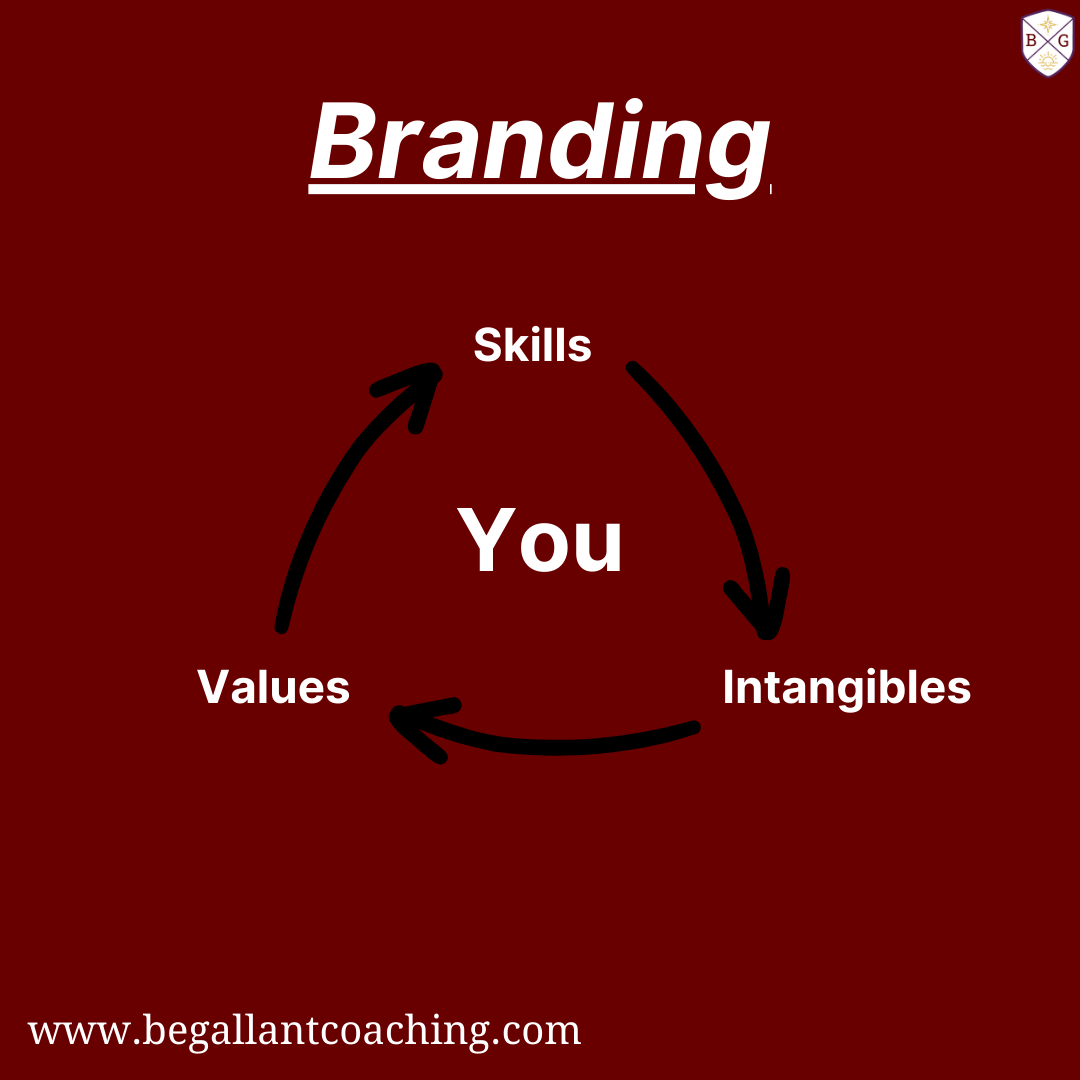
Part of developing your brand is identifying your core tools, and learning how to sell/pitch them. In other words, what skills are you really really good with, and how well do you convey your proficiency with them?

Getting your framing down.

When you get really clear on your brand, you’ll be more aware of your core skills. You’ll become better at telling stories about how you have and can use them. You’ll be more effective at conveying your ability to drive impact and outcomes.

And this will help you translate your transferable skills into a set of tools that can actually help you land that project manager role.

If you’re looking to pivot from one role type or field to another, branding is a valuable step for you.

Would you be able to tell me about your brand right now? If the answer is no, we should talk.

I’m running a Build Your Transferable Brand program designed to help you put together your brand in 2 1-on-1 sessions with me. The details and benefits? See for yourself:

It’s a $400 program, but you can get it for $300 for the next 7 days! This deal is vanishing on August 2nd!

Let’s get to it right now so you can be up and running in time for the fall (as in, when hiring typically picks back up again).

Click here to get started.

Wanna talk about it? Send me a message!

Go back

Your message has been sent

Warning
Warning
Warning
Warning.

See you soon!

Categories
Uncategorized

Silencing Your Self-Saboteur: How to Stop Being Your Own Worst Enemy in Your Career

Go back

Your message has been sent

Warning
Warning
Warning.

Job searching is hard enough. There’s just a lot to navigate:

  • Writing a great resume and cover letter
  • Networking well
  • Interviewing well
  • Finding the right jobs to apply for
  • 100s and 100s of other applicants competing for the same roles
  • Already working another job
  • Etc.

You have to finesse and fight your way through all that, and yet sometimes those might not even be the biggest hurdle.

The biggest hurdle for a lot of us when it comes to job searching–and really any major life or career goal–is Big Bad Us.

Ourselves.

Not the competition, not the resume, not the this or that.

YOU.

You are in your own way. You need to get out of it.

And that’s much easier said than done.

So. If you have a sneaking suspicion that you may have been in your own way, keep reading.

Usually, when we’re in our own way it’s because there’s some kind of internal block going on.

Let’s call them “gremlins.”

Here are the ones I usually see in the people I work with:

  • Imposter syndrome
  • Fear of failure
  • Lack of confidence

They manifest in phrases (internally or externally) like:

  • “I just don’t think I’m qualified.”
  • “Maybe one day I’ll have more time.”
  • “I’m procrastinating, I know.”
  • “I don’t have the confidence for that yet.”
  • “I’m worried I’ll make a mistake.”
  • “I’m just not sure what the right first step is.”
  • “What if it doesn’t work?”
  • “I’m not sure I’ll be able to do it.”

Any of this sound like you? You may have a little gremlin in your ear! That’s ok, most of us do.

If you have goals that you KNOW you really want to accomplish, but “for some reason” you keep putting it off, or refusing to fully acknowledge it, or the universe somehow just keeps getting in the way, you miiiiight have a gremlin.

You need to do something about it so you can get out of your own way.

The first step to getting out of your own way, though, is recognizing what the blockage is for you, and acknowledging that it’s actually there.

In other words, if you struggle with imposter syndrome, you have to admit that to yourself.

What that does is it allows you to more directly combat the problem and interrupt it.

Once you’ve identified what the blockage is, it’s important to understand some key things about it.

A lot of times, your gremlins are not actually real.

They may be based on real and valid concerns and experiences, but there’s probably not a whole lot of evidence that JUSTIFIES them being a substantial influence in your life.

For example, if you struggle with imposter syndrome holding you back from making a big career transition, that’s based on a valid concern, but the truth is you’re probably much closer to not being an imposter at all.

Have you ever really been an imposter before? 

→ “No, not really.”

Have you ever been hired or selected for something and subsequently exposed as a fraud?

→ “Not…that I can think of, no.”

Has anyone ever given you the feedback that your skills are trash?

→ “No.”

How do you know that your qualifications aren’t transferable?

→ “I don’t, I guess. I just don’t know that they are or how they’re transferable.”

Again, these are valid concerns. No one wants to be exposed as a fraud. No one wants to give their best shot at something that really matters to them, only to fall short.

But the point is that a lot of you have very little evidence in your history to point to–if any at all–that actually supports your imposter syndrome.

Will you have to learn some new things? Possibly.

Will you have to apply yourself and find out? Absolutely. So you need to get out of your own way and do that.

Which brings me to my next point:

That’s right, I said it!

You don’t have to vanquish your fear of failure, or your lack of confidence, or whatever it is.

You just have to learn to now allow it to make or influence your real world decisions.

Ever been to a park or something and seen a little kid in full tantrum mode because their dad is telling them it’s time to leave?

“nnnOOOO I don’t wanna leave!!! I wanna stay at the park! You’re a bad daddy!!”

The dad is just like “Nope it’s time to go home. We’re not staying at the park.” *stuffs kid in the car*

Exactly.

Your imposter syndrome is going to kick and scream and try to lure you into getting in the way.

Your lack of confidence is going to tell you you have to sleep at the park tonight because it’s safer there.

Your fear of failure is going to tell you you just don’t have enough time, energy, skill, or whatever else to get started.

And that’s ok.

You don’t have to throw it out the car. It just doesn’t get to drive and it doesn’t get to sit in the front seat.

It definitely does NOT get to tell you you’re sleeping in the park tonight.

You have to coach yourself into acting in the presence of whatever it is that’s causing you to get in your own way.

Once you get there, I bet you’ll start making some progress on those goals you got stashed in the back of your mind and heart.

This is hard.

If you want to talk to someone about it, come let me know. You can sign up for a free consultation with me when you’re ready.

I want you to sign up for my free email list! As you learn to start getting out of your own way when it comes to your career goals, you’ll need some new tools.

I’ll send you some good gravy that’ll help you navigate your job searches and career pivots.

You’re reading this, so I must’ve struck a nerve. This is your sign to start getting active.

Sign up today for some free coaching in your inbox and let’s make some moves.

Go back

Your message has been sent

Warning
Warning
Warning.

Categories
Uncategorized

Nervous interviewer? 3 confidence-building tips for interviews

Intense sweating?

Blanking out?

Clicking your pen?

Rambling?

You might be a nervous interviewer. I see lots of people who are anxious before their interviews. It’s natural. It’s a sign you care a lot. It also sucks because it gets in your way of performing well and landing that dang job. 

BUT, with the right mindset and preparation, you can approach your next job interview with confidence and boost those chances of success. Let’s explore some tips and insights I share with my clients that can help you navigate the interview process with more ease.

Most people who struggle with interviews often experience anxiety because they anticipate being asked questions they either won’t be able to answer at all, or won’t have a good answer to. 

However, if you’re applying for jobs you know you’re qualified for, the chances of running into a question you can’t handle are pretty close to zero. 

Remember, the only reason you’re even in the interview is because you have the skills and experience the employer is seeking. Rather than letting anxiety take over, allow yourself to relax and trust in your abilities. When you’re relaxed, you’re more likely to feel confident and provide thoughtful responses.

They are not going to stump you!

It’s easy to slip out of your natural personality in an interview because the power dynamic can make you nervous. To combat this, consciously remind yourself to stay grounded in your personality in the interview. 

One thing that can help you stay in your personality is breaking the ice early. Try making a casual observation about the interviewer’s room or background during the initial introductions. 

For example, you could say something like, “Wow, I just gotta say, your cork board is huge! I need me something like THAT!” or “Before we start, I just wanna say your background kinda reminds me of that one scene in Finding Nemo!” or “I see the sun is shining where you are, and it’s reminding me I need to go get some sun today!” 

These small personal touches can help you relax and allow your true personality to shine through.

Even when you know you have a solid answer to a question, resist the urge to respond immediately. 

Instead, take a brief pause – a second or two – before answering. Look up, thoughtful as always, and then provide your response. This small pause can help you gather and organize your thoughts, preventing rambling or incoherent answers. 

Additionally, it conveys valuable intangibles to your interviewers, such as confidence, an ability to think carefully on your feet, and comfort handling pressure (even if you don’t actually feel that way in the moment).

And there ya go! Start with these tips, and go from there.

Remember, if you’re applying for jobs that align with your qualifications, you’re likely to have good answers to the interview questions.

By embracing your qualifications, bringing your personality to the interview, and pausing before responding, you’ll help yourself take the edge off your anxiety in your next job interview.

Good luck out there interviewers!

You’re job searching–or thinking about job searching–and not having a good time?

You’re putting off job searching because you’re worried about the stress?

Yeah it’s hard out there.

Coaching might be a good resource for you, but if you’re like most people, you’re probably not sure.

If you’d like to know more about coaching, how it has helped others in your situation, and how it can help you, fill out your info below or email me at brandon@begallantcoaching.com.

I’ll send you a quick email with some brief information you can read and digest on your own time.

Go back

Your message has been sent

Warning
Warning
Warning.

Or you can just sign up for a free consultation with me here.

Either way, let’s stay connected!

~B

Categories
Uncategorized

4 Reasons why your brand can unlock your job search

Come sit ’round the fire, job seekers!

Let’s talk about something more valuable than your resume in the job hunt jungle: your brand. 

Does it sound like a marketing buzzword? 

Yes.

But IS it some kind of marketing buzzword?

…yes. But it’s actually the real deal this time.

It’s not just about what’s on your resume; it’s about who you are and how you present yourself to the world.

So, I’ve been chatting with a bunch of people lately (including some of you reading this), one on one, and when I ask about their brand, I see a lot of deer-in-the-headlights looks. 

Blank stares, awkward laughs, you name it. I’ve also been hearing a lot of confusion on things like how and where to start in the job search, especially for those of y’all who are looking to change industries. Very understandable. It’s like we’re all in this maze, and nobody’s sure where the exit is. 

But here’s the thing: your brand is your map. It’s what guides you to the right opportunities and helps you stand out from the crowd (click here for help on that).

Here are four solid reasons why nailing your brand is the key to job hunting success:

Ever feel like you’re wandering aimlessly through a job fair, not sure which booths to check out? Your brand is like a compass, pointing you toward roles that fit your skills and values like a glove. It’s all about finding your groove and going after the gigs that make your heart sing, both from a values standpoint and a skills standpoint.

Hiring managers are busy people. Recruiters are also busy people. They don’t have time to decode your resume and figure out what you bring to the table. You need to be able to do this quickly by identifying what’s important to them, and drawing accurate parallels between what they need and what you have. That’s where your brand comes in handy. It’s your elevator pitch, your value proposition, your secret sauce for showing them why you’re the right person for the job. It’s what allows you to clearly communicate how you can move the needle in a way that is unique and necessary.

Oh, and if you’re wondering about how to communicate the transferability of your skills (I’m lookin’ at y’all, education and non-profit professionals) this is at the core of that.

You’ve heard the saying, “It’s not what you know, it’s who you know.” Well, your brand is your VIP pass to the networking party. When people know who you are and what you’re all about, they’re more likely to hook you up with the right opportunities and introduce you to their circle of connections.

Think of your branding as your personal logo. You want it to be consistent across all your job hunt materials — your LinkedIn profile, your resume, your cover letter, you name it. That way, when employers see your brand popping up everywhere, they’ll recognize you and remember you more.

Figuring out your brand is not obvious, but it’s worth the effort. So, if you’re feeling lost in the job hunt wilderness, take a step back, pour yourself a cup of coffee, and let’s figure it out together.

The Build Your Transferable Brand program is meant to help you craft a brand that you are clear on and ready to use to your advantage in your job search.

Your brand will help you set yourself apart from others via the stories you craft in your resume and cover letter, interviews, LinkedIn, and networking opportunities. The transferability of your skills and the value of your impact will be clearer to the people you come in contact with.

And it’s only two sessions! If you’re still job searching or considering a pivot, meet with me for two sessions and I’ll have you up and running with a newly crafted brand you can actively use to your advantage this spring.

Early bird pricing is still active, so the program is only $295 and will last until May 5th. Click here and let’s get started!

Categories
Uncategorized

The 3-part LinkedIn strategy to use for your job search

In today’s digital age, LinkedIn has become the go-to platform for professionals seeking career blah blah blah.

Now that we got that out the way, let’s talk tangible stuff.

LinkedIn can be incredibly useful, but it can also be overwhelming and confusing. So much so that a lot of people–including some of my clients–just avoid it and miss out on its benefits. So allow me to simplify things by giving you a few keys to help you unlock your search via LinkedIn.

It may seem counterintuitive, but one of the most effective strategies for job hunting on LinkedIn is to avoid applying directly through the platform. Instead, use LinkedIn as a research tool to gather information about potential employers, their respective industries, and what jobs are even available.

Once you’ve found a role you like and gathered enough info, apply directly on the company site, or even better, directly with a recruiter.

I repeat, always apply directly on the company site, or directly with a recruiter.

Start by exploring company profiles to gain insights into their culture, values, and recent developments. Take note of any connections you have who work at these companies and reach out to them for informational interviews or advice.

By taking a proactive approach to research and networking on LinkedIn, you can gain a deeper understanding of potential employers and position yourself as a qualified candidate when the time comes to apply.

I regularly hear education and non-profit professionals (and really people from a lot of career fields) talk about how discouraging it is to see a job posting with 500 applicants, but PAY IT NO MIND. Three reasons for that:

  1. The number of applicants is just one piece of the puzzle, and it doesn’t necessarily reflect the quality of your candidacy.
  2. If it’s NOT an Easy Apply posting, then the “Apply” button you see is basically just a link to the original posting on the company website. Once you leave LinkedIn, the platform has no way of knowing whether you applied or not, so it just counts EVERYONE that clicked the Apply button/link as an applicant. Try it out yourself. Click the button and then go back to LinkedIn and refresh the page a couple times. You’ll see the number go up. In other words…that number means practically nothing to you.
  3. If it IS an Easy Apply posting, a whole lotta those applicants are not going to be particularly qualified. They just applied because it was…easy. Again, that number basically has no meaning.

So anyway, instead of focusing on the competition, focus on crafting a tailored application that highlights your skills, experiences, results, and alignment with the company’s values. Personalize your resume and cover letter to demonstrate your genuine interest in the role and your potential contributions to the organization.

Get to know your BRAND! Speaking of which, let’s pause…

****

Do you know your brand? Knowing your brand and how to convey it well is what will ultimately distinguish you from other candidates with similar skills, experience, and qualifications.

So yes, you need to know your brand in and out and how to convey it. If you don’t, peep the end of this post.

****

Remember, recruiters are looking for candidates who stand out from the crowd, so use this opportunity to showcase your unique qualifications and passion for the position. By staying focused on your strengths and what sets you apart, you can increase your chances of catching the recruiter’s attention, regardless of the number of applicants.

While the Jobs section on LinkedIn is a valuable resource for finding job listings, it can also be a powerful tool for networking and making connections within your target companies.

Some postings will literally tell you who the hiring manager or recruiter is. That’s golden information! Send them a connection request and engage with their content to build rapport and demonstrate your enthusiasm for the opportunity.

Take advantage of the fact that LinkedIn shows you if you have connections or fellow alumni at the companies you’re looking at to identify potential contacts. Reach out to them with personalized messages expressing your interest in the company and asking for advice or insights into the hiring process.

And you can also look at the People tab on the company profile to identify in-house recruiters or talent acquisition pros. You’ll wanna reach out to them too.

When you leverage the Jobs section strategically, you can not only uncover job opportunities but also expand your network and increase your chances of getting noticed by hiring decision-makers.

And there you have it! Take this strategy and apply it to your search. Keep at it and eventually you’ll break through!

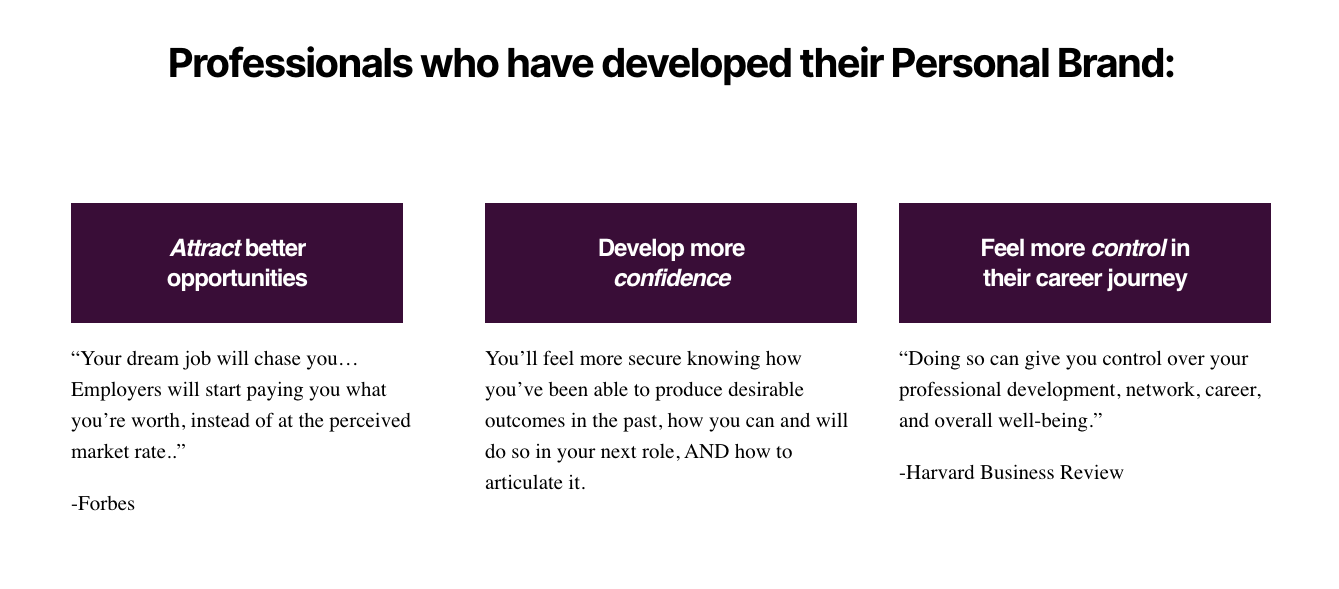
Professionals that are really tapped into their brand tend to have way more success in their career and job searches than those who are not.

They’re more confident, better at conveying how they drive impact (which is ultimately what an employer cares about), and they understand how their skills are translatable to multiple roles and industries.

If you’re having trouble landing interviews or job offers, there’s probably a branding component that you’re falling short on.

I want to invite you to take part in my short-term branding program, where you and I will work together to build out your brand and your ability to successfully and quickly convey it to your benefit.

Using your brand will help you set yourself apart from others via the stories you craft in your resume and cover letter, interviews, LinkedIn, and networking opportunities. The transferability of your skills and the value of your impact will be clearer to those you come in contact with.

The results: greater confidence, better job offers, more aligned work, and better compensation.

And it’s only two sessions! If you’re still job searching and considering a pivot, meet with me for two sessions and I’ll have you up and running with a newly crafted brand you can actively use to your advantage this spring.

Early bird pricing is only $295 and will last until May 5th. Click here and let’s get started!

We’re at the beginning of spring, so now is a great time to get active on this! Don’t let the spring energy pass you by!

Categories
Uncategorized

You can keep your career imposter syndrome

Imposter syndrome.

General lack of confidence.

Doubt.

Fear of the unknown.

A lot of us have dealt with–or are still dealing with–some sort of internalized challenge that has gotten in the way of our career progress.

And it sucks!

For those of you who know what I’m talking about, keep reading. I have a lesson I want to share with you that has helped me immensely.

In early March 2024 I was invited to a panel hosted at my alma mater to talk about how my Black identity has impacted my career trajectory.

It had me reflecting on things I don’t always directly think about. Definitely not recently. Lemme explain real quick.

I was a STEM student (still feel like I’m a STEM person deep down, but that’s another story). I majored in math and computer science at UC Santa Barbara. In the majority of my classes for my majors, I was the only black student. At most, I remember there being 1 or 2 others in some of them.

I remember being stared at when I walked into the classrooms. It was like one of those “Uhhh– oh snap I’m staring at him and he saw me” looks. Lol.

And get this! When I first started in computer science I didn’t even know what it actually was. But my peers definitely did. Many of them went to high schools that taught CS. Mine definitely did not, so I was kinda coming in behind.

Put all that together and what did it make? Say it with me–Imposter Syndrome! Still, I got pretty good.

Fast forward to now and I coach people on how to successfully navigate the job search process through the wonderful world that is Be Gallant Coaching. When I take a look at my fellow coaches, or when I’m in a space with other coaches, what do I see?

I’m almost invariably the youngest and the only black person. I’ve even had people point it out to me.

I still feel imposter syndrome from time to time.

BUT!

In that, there’s a lesson I’ve picked up over time that’s helped me make more progress faster. And it started back in my computer science and math days as an undergrad.

Ready for this? Here it is…

As long as I remember it’s not allowed to make or influence my real world decisions. 

Because guess what, yall? I’ve helped LOADS of people take the next step in their career.

I’m talking land jobs, pivot industries, negotiate better offers. The works.

I’ve empowered lots of people and the vast majority of them are BIPOC and/or underrepresented.

The messages things like my imposter syndrome tell me aren’t actually real. I feel them. They come from real things and experiences…but they’re not real.

So if you deal with imposter syndrome or lack of confidence or fear or whatever your “gremlin” is. Cool.

You can actually keep it. You don’t have to utterly vanquish it at all.

Just remember that it has to sit in the back seat, and under no circumstances does it get to touch the steering wheel.

Take some imperfect action today!

It’s time to get moving on your career goals, and if job searching is on the horizon for you, it’s time for you to identify your brand.

Your brand is what sets you apart from a competitive pool of people who are just as qualified as you are.

It’s what helps employers understand the transferability, value, and impact of your skills.

If you don’t know what your brand is right now, sign up below for info on how you can start to build it today.

Your skills and experience are valuable and transferable, especially if you’re coming from the education or non-profit worlds.

Stay Brave!

Go back

Your message has been sent

Warning
Warning
Warning.

Categories
Uncategorized

3 Follow-up templates to use in your job search

One of the best things you can do for yourself when you’re applying for a job is…

Follow up.

Follow up with that one person you networked with after your informational interview.

Follow up with the recruiter after you submit every single job application.

Follow up with your interviewers after your interviews.

Follow it all up! Do it every time!

But knowing what to say isn’t always super intuitive, so I’ll help you out with a couple samples!

Hello [Name],

My name is Brandon, and I’m reaching out to let you know that I eagerly submitted my application for the [job title] position over the weekend.

I’m very excited about the opportunity to [describe something about the role you’re excited about]! I would greatly appreciate the opportunity to discuss my fit for the position with you, as I believe my experience and skills in [blah blah] will position me to make an immediate impact. Do you have 10 minutes this week to discuss the role with me?

I’m looking forward to hearing from you soon!

Best wishes,

Brandon

Hello [Interviewer],

Thanks so much for taking the time to speak with me about my fit for the [position name] earlier today. I really enjoyed the time we spent, and I particularly enjoyed your question about [blah blah]! 

I recognize that it is crucial to be able to [highlight a central function you’re able to excel at] in this role. I want to reiterate my excitement to hit the ground running with that and make an immediate impact on the team.

If you have any other questions about my fit for the role, please don’t hesitate to reach out. I’m more than happy to hop on another call with you. 

Again, I really appreciate your time. I look forward to hearing from you soon.

Take care,

Brandon

Hi [So and So],

It’s been some time since we last spoke! Quick refresher: I’m Brandon Johnson. We met at that networking event in Downtown LA last year, where we connected over [such and such]. I still think about some of the thoughts you shared from time to time!

I saw your company is hiring for another Customer Support Manager position and I’m really interested in applying for it! I was wondering if you’d be open to setting up a quick 10 minute phone call with me. I’d love to hear about your experience in the role and learn from your insights. Are you available next Monday or Wednesday at all?

Hope to hear from you soon! Maybe I’ll see you at the next conference!

Take care,

Brandon

WRAPPING UP

And there ya have it! Short, sweet, and to the point. Feel free to take and adapt.

Of course, this kind of outreach comes after your application, or after your interview, and so on and so forth. There’s a lot that goes into job searching…and it’s not always easy.

If you’re interested in getting some support, or if you just want to explore support options, let me know.

You can set up a free consultation with me (CLICK HERE!) and subscribe to my blog below (yes, it’s the F-word: Fantastic……….And Free).

Time to make that transition you’ve been putting off! Stay Brave.

~Brandon