

Raise your hand if you have transferable skills!
Now keep your hand up if you feel like you’re having 0 luck landing a job despite having transferable skills.
Awkward.
In theory, transferable skills are super valuable. In fact, you can google transferable skills and find all kinds of blogs and articles talking about how in-demand they are.
In reality, though, what tends to happen is transferable skills don’t land you a job.
Transferable skills on their own will not land you a job.
On their own, they are kinda useless.
There’s hope, but first, let’s look at why I’m telling you they’re useless on their own.

AN EXAMPLE
Let’s say I’m a hiring manager, and I’m hiring for a Project Manager role. There are 100 candidates in the pool for this position.
Keep in mind that my hiring team and I have limited time and resources.
Why would I hire a teacher with transferable skills, when there’s 30 perfectly good project managers in the pool?
What are the chances of that?
What are the chances of me using my limited resources to even interview that teacher with transferable skills when I could just interview the 30 perfectly good project managers?
The odds are probably not very good.
Now if I had UNLIMITED resources (i.e. time, money, energy, hands, etc.), then sure I might take the time to really dive into exploring how actually useful and relevant your transferable skills are (they are). I might actually come to understand how effective you are at delivering the results I need via your transferable skills, especially once you’ve been trained.
But I don’t have unlimited resources, sooo I’m probably just gonna make it easy on myself and hire someone who’s already a project manager. Sorry.
This is why you’re not getting interviews or jobs off the strength of your transferable skills.
But again! There’s hope!
In order for your transferable skills to be useful, you have to do something with them.
You have to translate them.
HOW DO YOU DO THAT?
- First of all, you have to identify what your relevant transferable skills are. What is it that you can do that would be useful in a different context? What functions have you performed that require abilities you could use in a new field or role type?
You have to be intentional and specific about this step first and foremost.
- Once you’ve identified them, it’s time to learn how to tell stories about them. In particular, it’s time to stop talking about your “teacher” experience like teacher experience, and instead start talking about it like “project manager” experience.
An employer is not going to connect the dots between your transferable skills and the role for you. You have to do it for them.
This second step is the part that trips people up. In order to talk about your teacher experiences and skills like project manager experiences and skills, you need to learn how project managers talk about their stuff.
What do you know about what project managers actually do on the day-to-day? What tasks and functions do they execute? What terms and lingo do they use? What outcomes do they work toward (emphasis on this part)? So on and so forth.
You gotta learn how to tell the story correctly, and that means telling it in a way that is (1) recognizable and (2) speaks to the relevant impact you can have through your skills.
Without this, your transferable skills will not do you much good.
BRANDING PLAYS A ROLE
Part of developing your brand is identifying your core tools, and learning how to sell/pitch them. In other words, what skills are you really really good with, and how well do you convey your proficiency with them?
Getting your framing down.
When you get really clear on your brand, you’ll be more aware of your core skills. You’ll become better at telling stories about how you have and can use them. You’ll be more effective at conveying your ability to drive impact and outcomes.
And this will help you translate your transferable skills into a set of tools that can actually help you land that project manager role.
If you’re looking to pivot from one role type or field to another, branding is a valuable step for you.
Would you be able to tell me about your brand right now? If the answer is no, we should talk.
I’m running a Build Your Transferable Brand program designed to help you put together your brand in 2 1-on-1 sessions with me. The details and benefits? See for yourself:
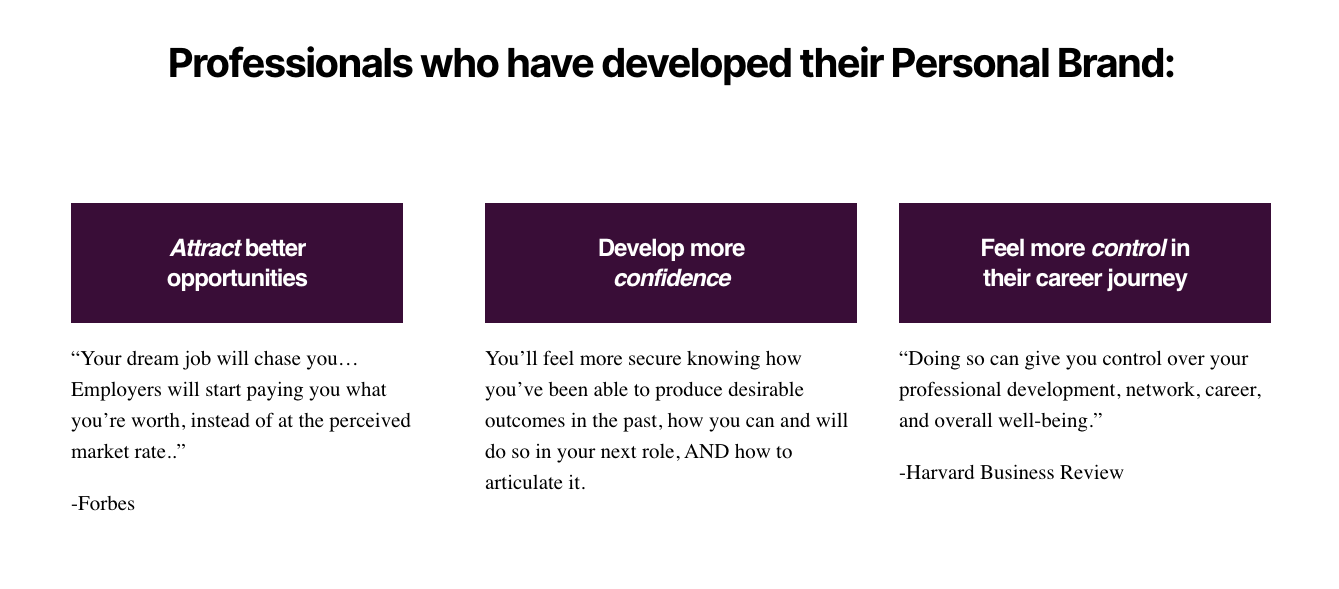


It’s a $400 program, but you can get it for $300 for the next 7 days! This deal is vanishing on August 2nd!
Let’s get to it right now so you can be up and running in time for the fall (as in, when hiring typically picks back up again).
Click here to get started.
Wanna talk about it? Send me a message!
CONTACT FORM


See you soon!

 Be Gallant Coaching